Number scale, star rating and satisfaction
Rating-based questions give you quantifiable insights into customer satisfaction and preferences. Whether through number scales, star ratings, or satisfaction levels, these metrics provide clear benchmarks for measuring customer experience and tracking improvements over time. Let's explore how to interpret these powerful indicators and use them to enhance your business decisions.
Average point/star
Track your overall rating performance through multiple views:
- Current average score across your selected time period
- Dynamic line graph showing rating trends over time
- Middle reference line indicating the running average
- Shaded area showing the range between highest and lowest ratings
- Detailed tooltips on hover revealing specific data points
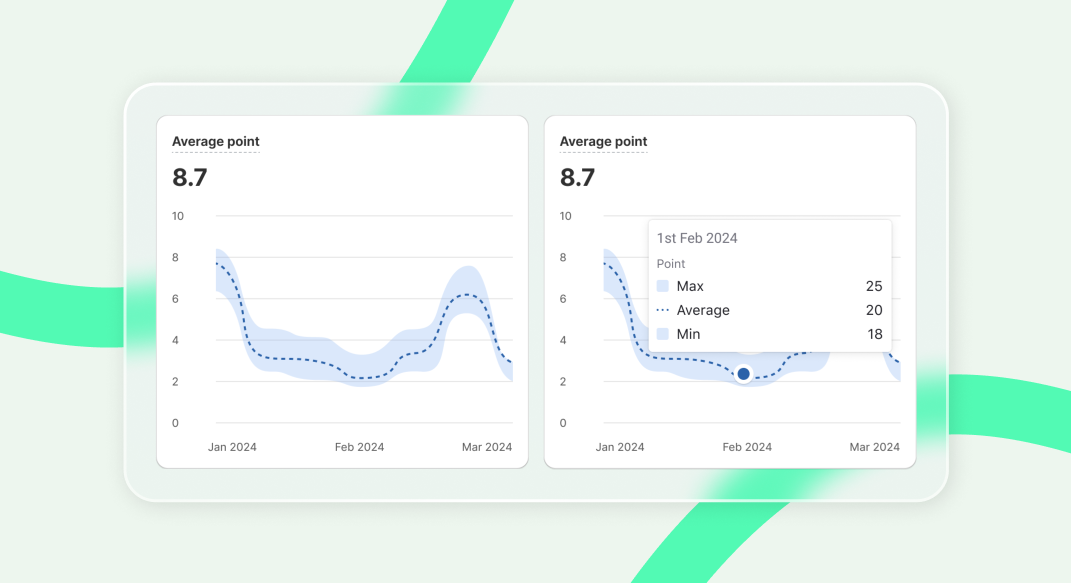
Understanding these metrics helps you identify not just your average performance, but also how consistent your ratings are and where fluctuations occur.
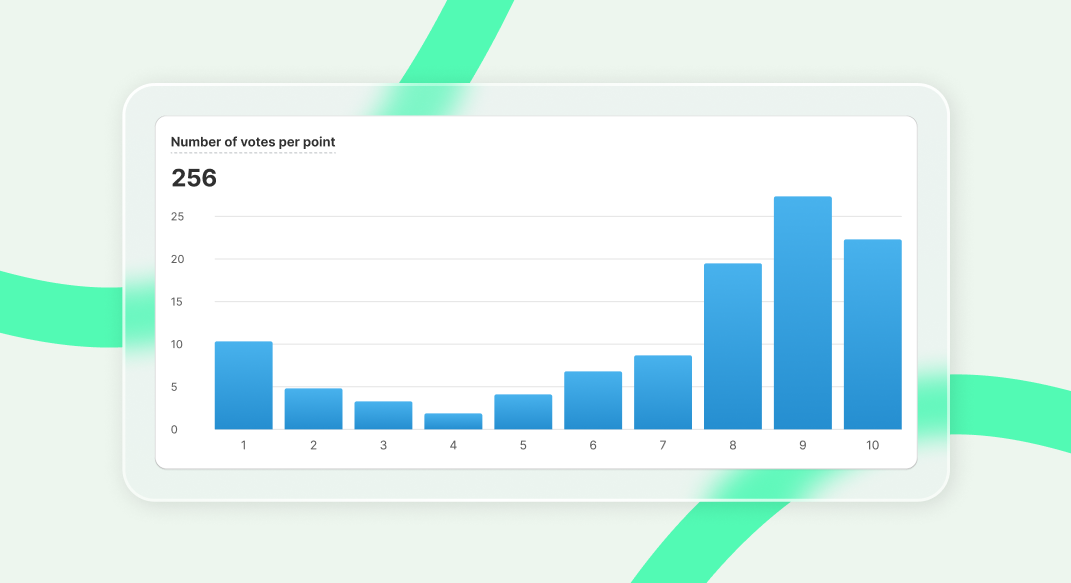
Number of votes per point
The bar chart breaks down how many customers gave each rating point, helping you:
- Spot rating patterns
- Identify rating clusters
- Understand the spread of customer satisfaction
- Detect potential polarization in customer experiences
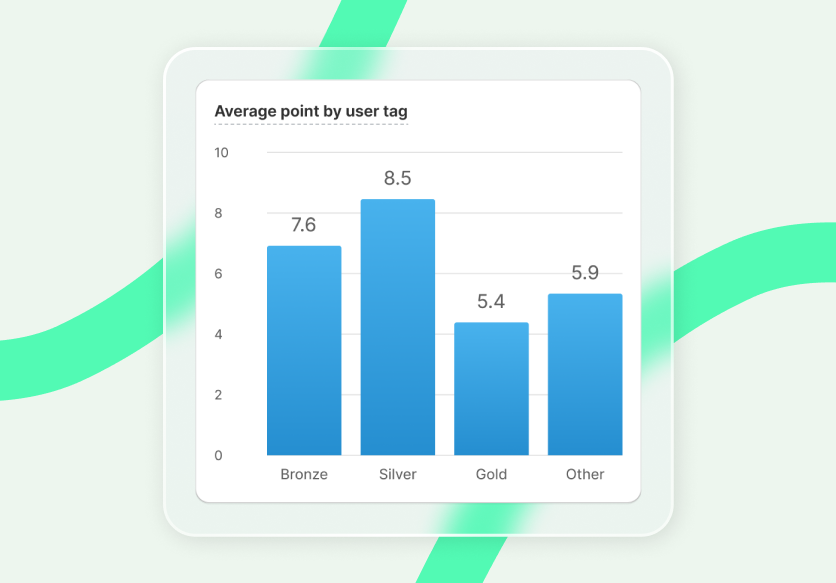
Average point by user tags
When you apply user tag filters, you'll see how different customer groups rate their experience. This segmentation helps you:
- Compare satisfaction across different customer types
- Identify segments that need more attention
- Recognize your most satisfied customer groups
- Target improvements for specific audiences
Pro tip: For satisfaction questions, we convert sentiment levels into a 5-point scale (Very Satisfied = 5, Very Dissatisfied = 1) to help you analyse satisfaction feedback with the same powerful tools.
Provided that you've mastered quantitative feedback analysis, let's explore how to derive insights from your customers' written responses in the next section on short answer question analytics.
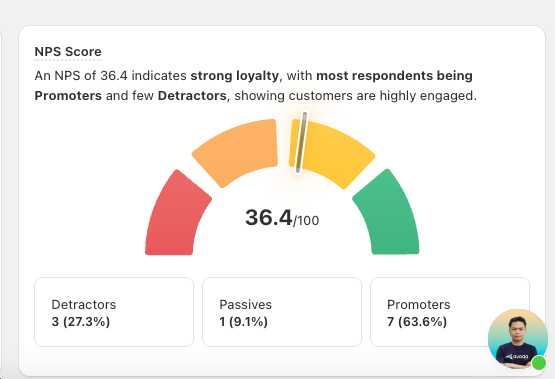
NPS Score Chart
Displays an overall NPS (Net Promoter Score), reflecting customer satisfaction and loyalty.
Survey responses are classified into three groups:
- Promoters (score 9–10): Highly satisfied customers who are likely to recommend the product.
- Passives (score 7–8): Neutral customers with little impact on brand growth.
- Detractors (score 0–6): Dissatisfied customers who may share negative feedback.
NPS calculation:
NPS = %Promoters − %Detractors
How to interpret NPS scores:
- < 0: Customer experience needs improvement; a high level of dissatisfaction.
- 0–29: Moderate customer satisfaction.
- 30–69: High customer loyalty; customers are likely to recommend the product.
- > 70: Exceptional satisfaction and loyalty; the brand is highly favored.
Applicable to question type: Number Scale (1–10)
Regularly updating and reviewing this chart will help in recognizing patterns and making informed decisions to enhance customer satisfaction.
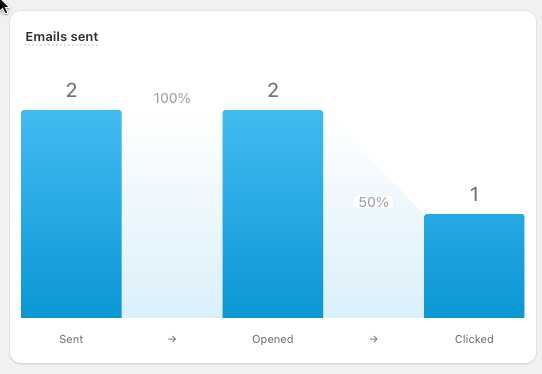
Emails sent
Displays key email performance metrics:
- Sent: Total number of emails delivered.
- Opened: Number of emails opened, shown as an open rate relative to total emails sent.
- Clicked: Number of recipients who clicked the survey link, shown as a click-through rate relative to total emails sent.
Note: Each customer is counted only once per survey link. Multiple clicks on the same survey link by the same customer are recorded as a single click.